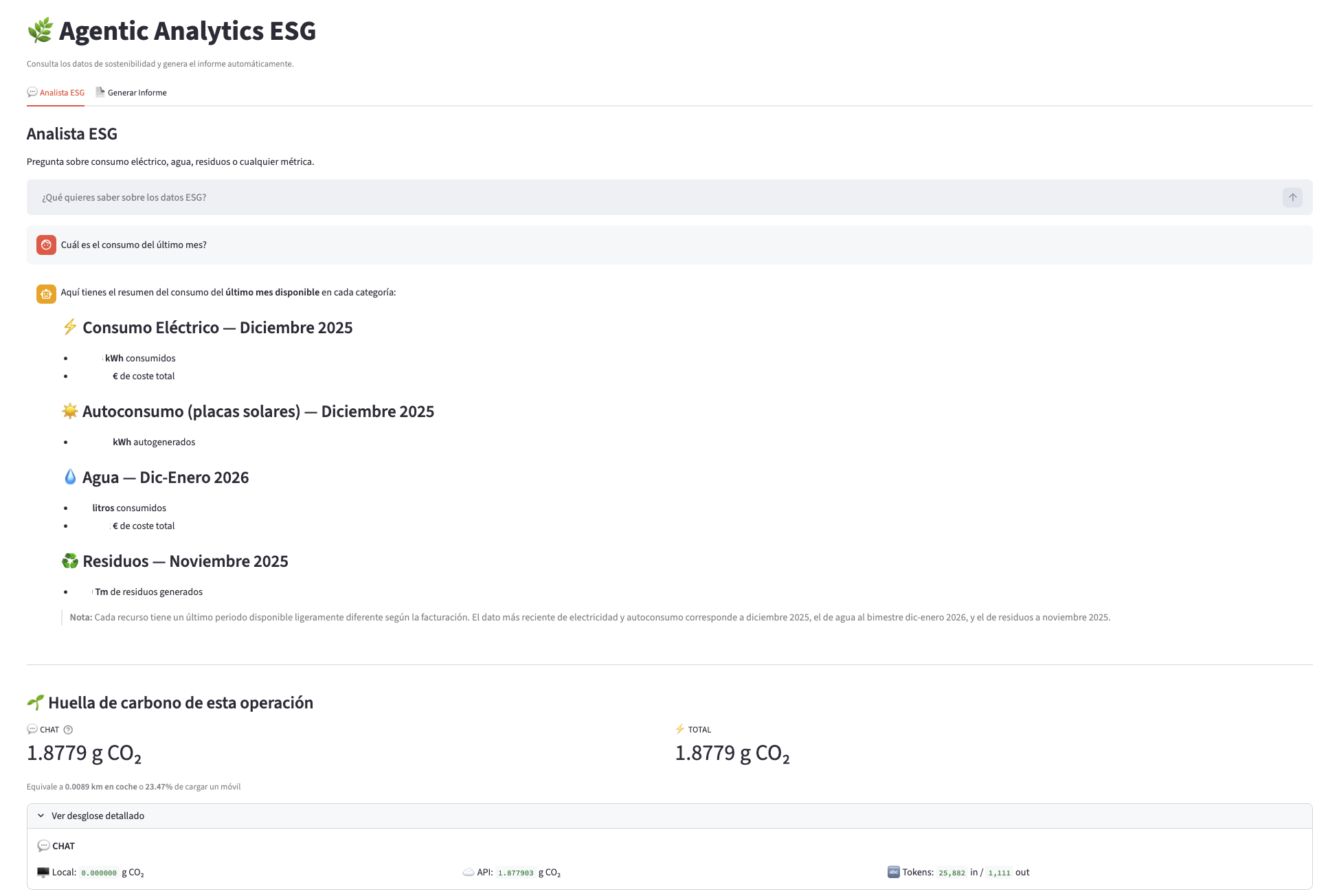
ESG Data
Sustainability Business Analytics
Sustainability


Your carbon footprint or reporting is being audited but you're so calm, you know your calculations are perfect, you have revisited a few times. You are pretty sure about it.
But the auditor calls you: "Hey, what is the data source of this calculation? It seems not so good." This question destroys all your security about your data and calculations.
Once again.
But let me say something this is all about manual work, why do you still using manual way with loads of quality analysis of your data? It's inefficient.
The growing demand for mandatory standards and sustainability reporting is forcing u to change our systems to a new one that allows an automated and efficient way of working with traceability and no errors.
This is the solution: the technology
In addition, the need to mitigate risks related to non-compliance, reputational damage, and
financial penalties further accelerates the adoption of ESG data management platforms
complete a complex scenario where companies need to move towards technology to create
an environment efficient and resilient to fast-moving regulations.
The past few years have seen remarkable technological advancement, with AI dominating much of the conversation around innovation. However, this post isn't another AI discussion. Frankly, I've grown weary of the AI-for-everything narrative, where more established tools often prove superior for specific use cases: predictable inputs, repeatable tasks, transparent processes, and scenarios where data sensitivity matters.
Don't misunderstand me—AI certainly has its place in sustainability work. But it's just one tool in an increasingly sophisticated toolkit. Over the past decade, technology has given us a wealth of solutions that genuinely enhance how we work in sustainability, and many of them have been quietly delivering results long before the current AI boom.
The key is knowing when to reach for which tool. AI excels in certain contexts—patternrecognition across vast datasets, natural language processing, or handling genuinely novel problems. But for routine workflows, structured data management, or situations requiring full transparency and auditability, traditional automation, databases management, or even well-designed pipelines often outperform AI whilst consuming fewer resources and introducing less risk.
It's about being thoughtful rather than trendy—choosing technologies based on the problem at hand, not the hype cycle.
When we talk about bringing Sustainability into the digital realm I focus mainly in 4 concepts*:
*Hey, David's here! I'm writing new entries' blogs for every concept with real examples and applications. Keep in mind to comeback :)
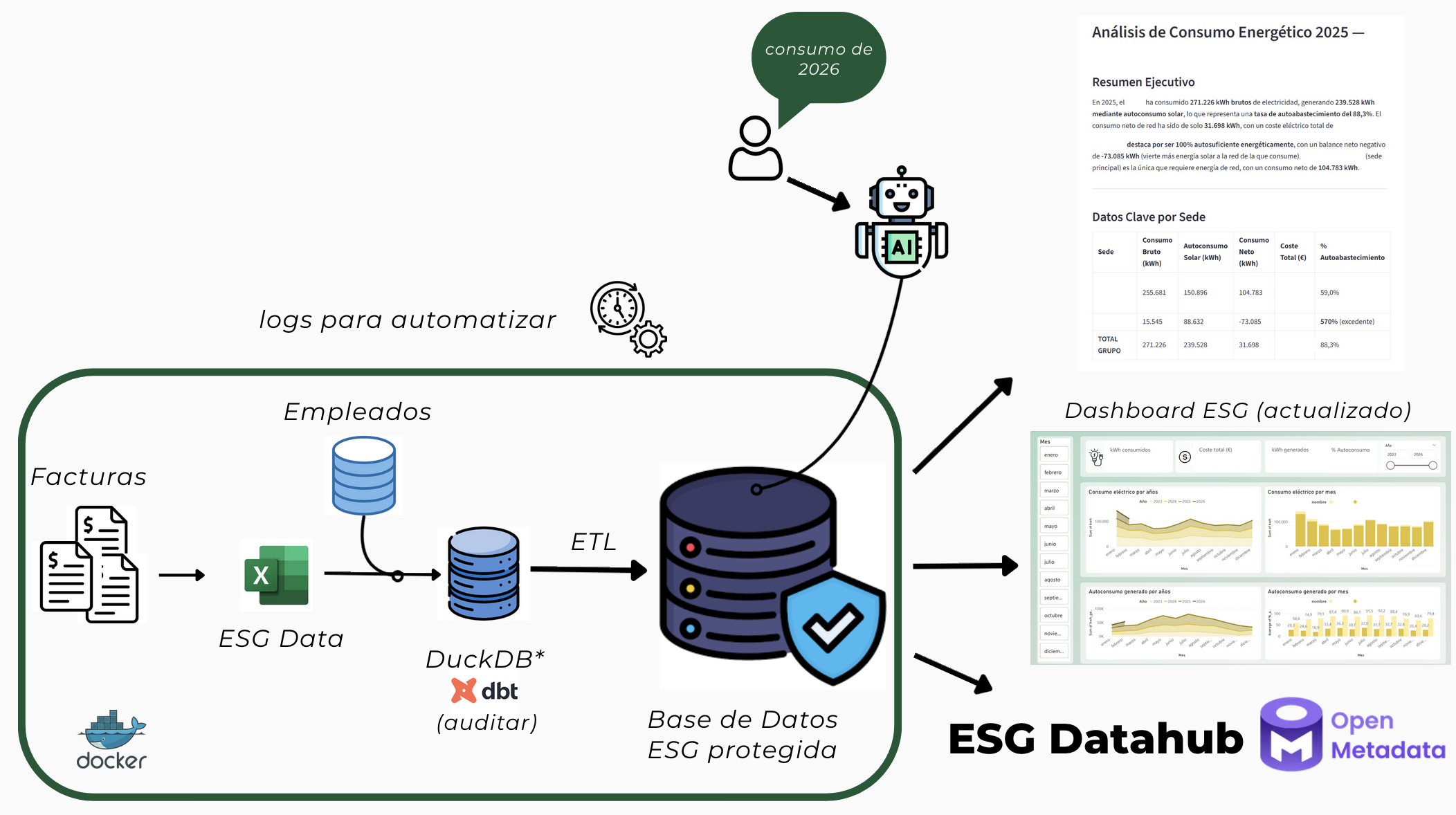
In summary, we need a real infrastructure that holds all ESG environment which is defined by databases and some apps (if that is needed). The second part is the traffic of our data, ESG Data will be moved from data sources, modified, and transformed to real value, which is defined by ESG Data Pipeline. Creating real insights from this data you need analyse them
The last part is "support activities" which is accomplished by automation. Automation is a key stage because it will allow us to reduce complexity, manual work and errors rate, creating an more quality space for our ESG Data improving ESG Data traceability and verifiability.

Before working on, you must know your needs and the maturity of technology in the
company. I would summary into 4 categories:
Due to CSRD and recent UE legal pressure, ESG Data integrity and traceability must be unaltered. In this scenario, Excel doesn’t seem the best option, doesn’t it? Using an external platform is an option, but from my point of view, it doesn’t scale as well as hosting yourself. However, being honest with you, this option is more difficult to maintain, to scale, and to build.
Given this scenario, you should choose one way to advance, and both differs from each one,but you must centralise ESG Data in a platform or one space (internal or external).
Having chosen your platform, the next step is audit your own data to identify the sources where your data comes from, because this marks the next steps of our ESG Data’s ETL pipeline:
It's worth deep into Data Storage. Data Storage is where data rests, being another key step in our ESG Data infrastructure, a reliable database:
A well-designed database as shown in the last paragraph open the door to a new space: advanced analytics that enhances our Sustainability and ESG department, as W. Edwards Deming said: If you don't have data, you have an opinion", it must be necessary holds our opinion in a Data analysis to make decisions.
Additionally, BI Tools helps us to identify Hidden Patterns and Opportunities across large datasets. You might discover that facilities with certain operational characteristics consistently outperform on energy efficiency, or that specific supplier regions correlate with higher Scope 3 emissions. These insights enable targeted interventions. For example, heat maps might reveal which business units or geographies are driving the majority of your environmental impact, allowing focused resource allocation.
Last but not least, BI Tools highlights the company's performance because it allows linking ESG to Financial Performance and BI connects ESG metrics to financial outcomes. You can visualize how energy efficiency projects impact operational costs, how diversity metrics correlate with innovation performance, or how supplier ESG ratings affect supply chain resilience. This financial translation is what transforms sustainability from a cost center into a strategic function that CFOs and CEOs pay attention to.
In this level of maturity, ESG and sustainability have brought tons of benefits to the company, bringing them knowledge about performance, not only from a raw materials and consumption perspective but also in a business way, giving some information about the company that leathers need.
The next stage is automation, we can productive more our work and create more benefits automating manual or repetitive tasks (that currently consume 70-80% of sustainability teams' time), reducing poor insightful work into a more strategic position, where ESG/Sustainability actually acts as a insights-giver to Direction. Addittionally, by automating these workflows, it dramatically reduces human error, accelerate reporting cycles from months to days or even real-time, ensure consistency across multiple frameworks and stakeholders, target-setting, and driving actual sustainability improvements rather than data
wrangling.
This automation landscape allows us to handle exponentially more complexity without proportional headcount increases. Most importantly, automation enables continuous monitoring rather than periodic snapshots, allowing you to identify and address sustainability issues proactively before they become material risks or compliance failures.

Machine Learning and predictive analytics transform ESG from reactive reporting to anticipatory management with tangible operational benefits.
These technologies enhance ESG risk management by identifying patterns signaling emerging supplier risks, regulatory non-compliance, or climate vulnerabilities across supply chains. ML also improves Scope 3 emissions estimation where direct measurement is impossible, using proxy data to generate audit-worthy estimates

While AI is generating tremendous hype in the sustainability space, most organizations
aren't remotely ready for it and don't actually need it yet. The fundamental challenge in ESG
isn't sophisticated algorithms—it's basic data infrastructure and process maturity. Most
companies are still struggling to collect consistent data from their own facilities, let alone
apply machine learning to it.
Before even considering AI, you need clean, structured, historical data at sufficient volume
and quality, which frankly most ESG programs don't have. AI models are only as good as
their training data, and if you're still manually collecting utility bills in spreadsheets or
chasing suppliers for emissions data, you're building on quicksand.
Moreover, AI introduces opacity exactly where ESG demands transparency: regulators and
auditors need to understand how you calculated your emissions, but "the neural network
said so" isn't an acceptable audit trail. The interpretability problem is real and potentially
fatal for compliance.
Most ESG challenges are solved with basic business intelligence, automated data
pipelines, and good database design—technologies that are mature, transparent, auditable.
Focus on getting those fundamentals right first; AI can wait until you've actually exhausted
the value of conventional analytics, which most organizations are decades away from
achieving.
The digitalization of ESG represents a fundamental shift from compliance burden to strategic advantage. By investing in robust databases, business intelligence, automation, and advanced analytics, sustainability teams transform from data collectors into strategic advisors who drive measurable business value.
This technology stack doesn't just make reporting easier—it embeds sustainability into operational decision-making, unlocks cost savings, mitigates risks proactively, and provides the transparency that regulators, investors, and stakeholders increasingly demand.
Organizations that build this digital foundation today position themselves to lead in a carbon-constrained, stakeholder-driven future, while those clinging to manual processes will struggle to keep pace with accelerating regulatory requirements and competitive pressures.